Press
Media resources for QueryTek Review.
Boilerplate, logos, architecture diagrams, and a short evaluation path for editors, analysts, and directory researchers. No sales call needed.
Last updated
Press
Boilerplate, logos, architecture diagrams, and a short evaluation path for editors, analysts, and directory researchers. No sales call needed.
Last updated
Use any block as written. Please keep “QueryTek Review” as two words.
QueryTek Review™ is a secure document review platform from Extanto Technology LLC. Clients upload a document, approve a per-word quote, and receive a rubric-based scorecard written by trained human reviewers. Review covers AI output, content risk, learning content, and plain language, with encrypted storage, tenant isolation, and an immutable audit trail.
QueryTek Review™ is a secure document review platform from Extanto Technology LLC. Clients upload a document through the portal, email, a connected folder, or the integrator API, approve a per-word quote, and receive a rubric-based scorecard. Every scorecard is written by a trained human reviewer and approved by a review lead before the client sees it. Review offers four modules: AI Output, Content Risk, Learning Content, and Plain Language. Documents are encrypted at rest with AES-256-GCM, isolated per organization with database row-level security, and every access is recorded in an immutable audit log. Integrators receive results by webhook.
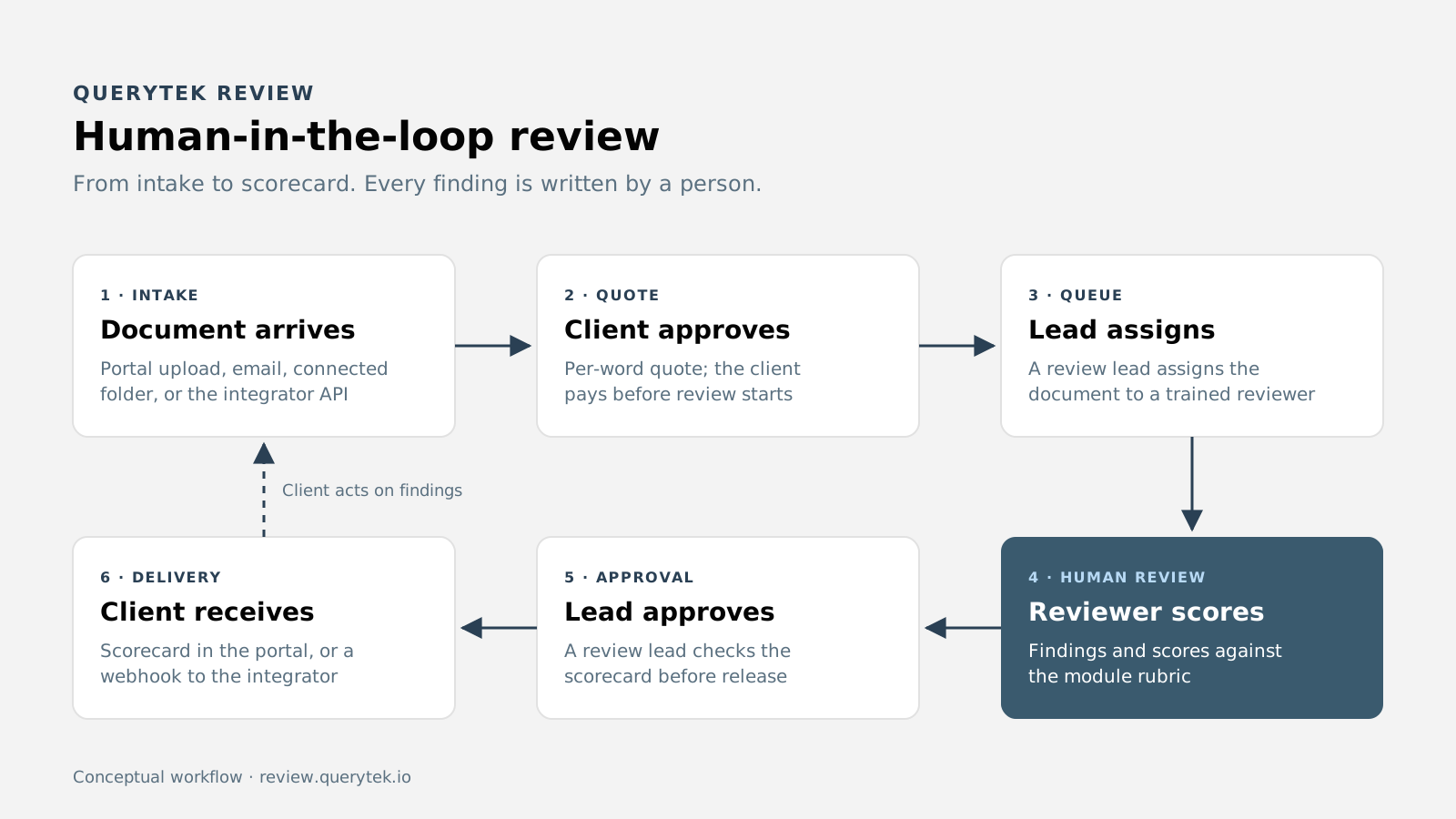
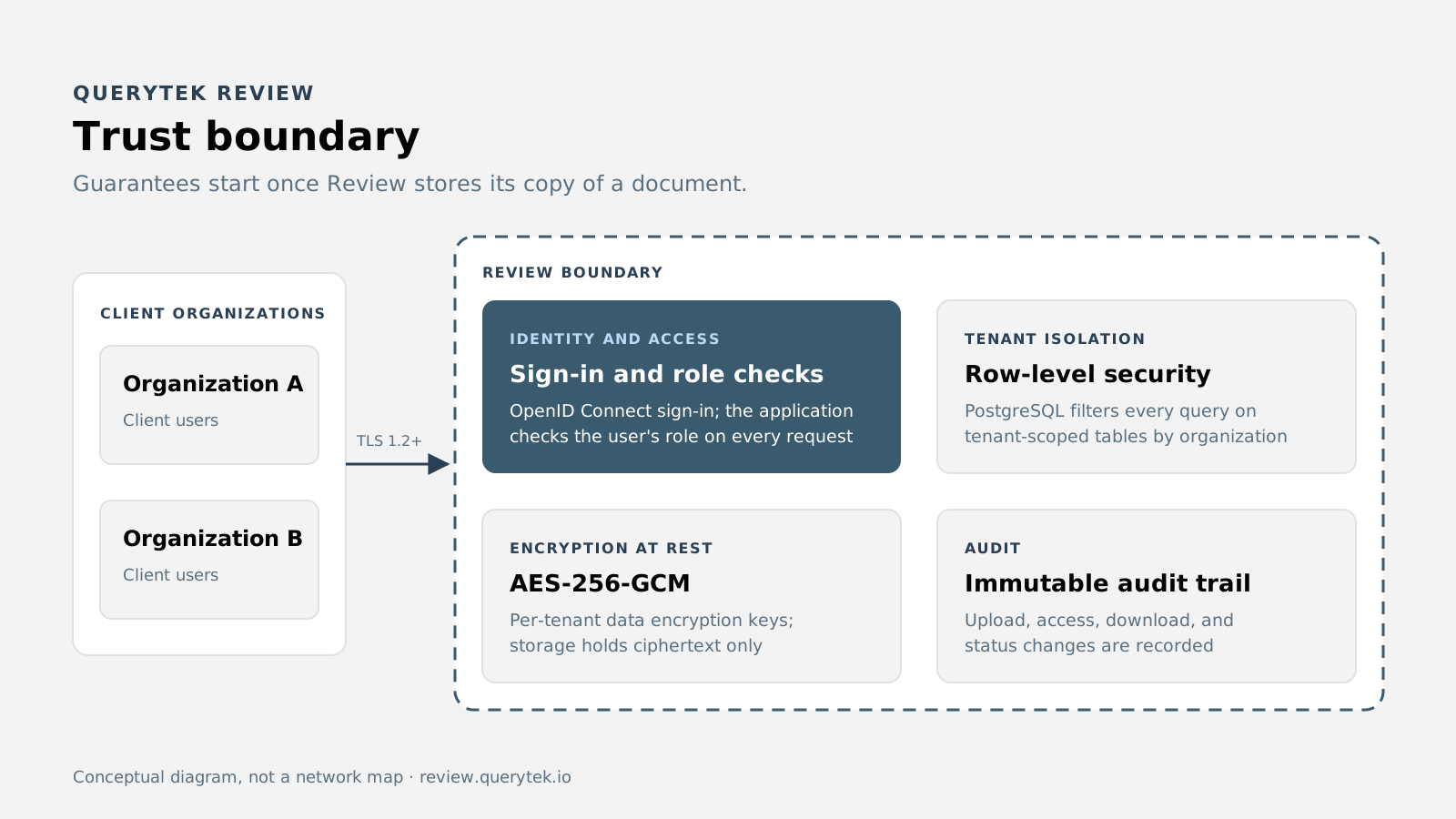
QueryTek Review™ is a secure document review platform from Extanto Technology LLC. It gives compliance, AI, education, and corporate communications teams a human check on documents before they reach customers, employees, or learners. Clients submit work through the portal, by email, from a connected Box, Google Drive, or OneDrive folder, or through the integrator API. Each document receives a per-word quote; review starts once the client pays. A review lead assigns the document to a trained reviewer, who reads it in full and records findings and scores against the module rubric. The review lead checks the scorecard before it is released. The client receives it in the portal, and integrators can receive it by webhook. Review offers four modules. AI Output review checks model-generated text, prompts, and chatbot responses for bias, harmful output, hallucinations, and audience misreading. Content Risk review covers handbooks, policies, and corporate messaging for communication risk, bias, and audience fit. Learning Content review checks curriculum, assessments, and courseware for clarity, suitability, and accessibility. Plain Language review checks whether readers of regulated and enterprise content can find, understand, and use what it says. Security is built in from the moment Review stores a document. Files are encrypted at rest with AES-256-GCM using per-tenant data encryption keys. PostgreSQL row-level security filters every query on tenant-scoped tables by organization. Upload, access, download, and status changes are recorded in an immutable audit log. The public Trust Center lists what Extanto can substantiate today and what is not yet available. Scores and findings always come from people, not from an automated scoring model.
Logos, diagrams, and screenshots in one ZIP, or the logo pack on its own. Screenshots use synthetic or clearly labeled fictional data.
Kit v1, updated . SHA-256 checksums are listed in the kit manifest (JSON).
Two conceptual diagrams: how a document moves through human review, and where the security guarantees apply. The developer portal documents the integrator API. Developer portal
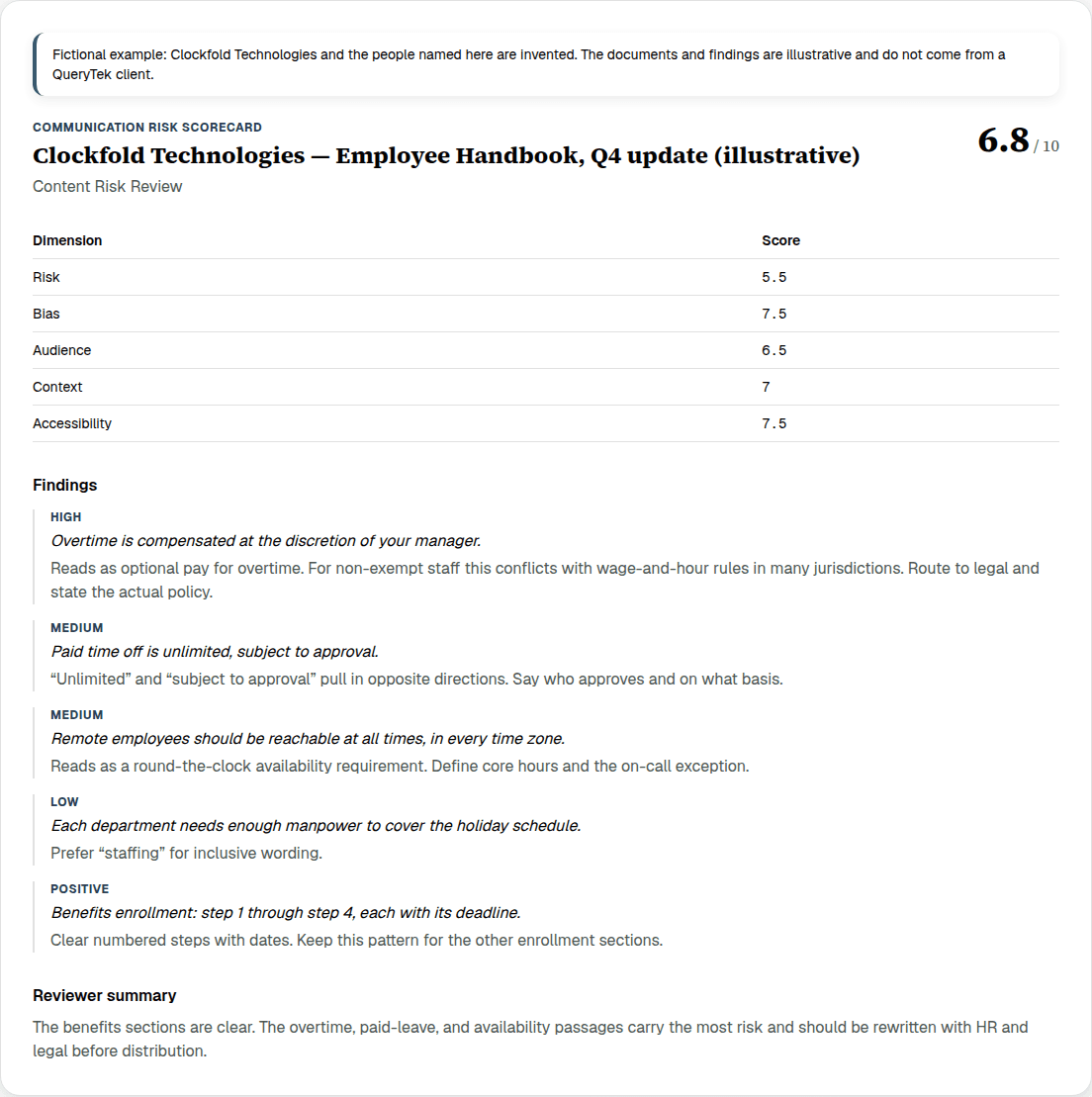
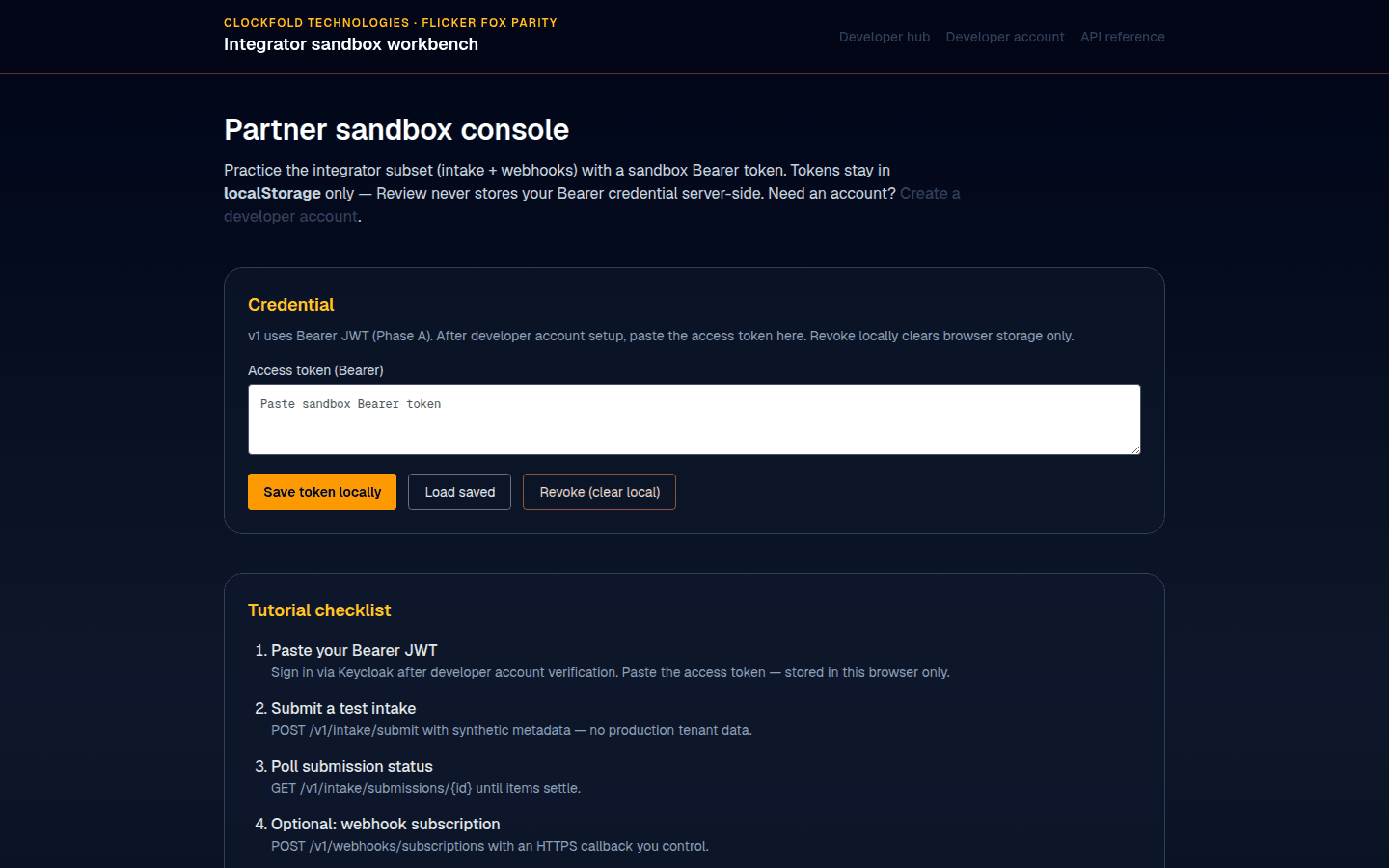
About 15 minutes, no account needed. We don’t hand out demo logins; every example below is fictional and labeled as such.
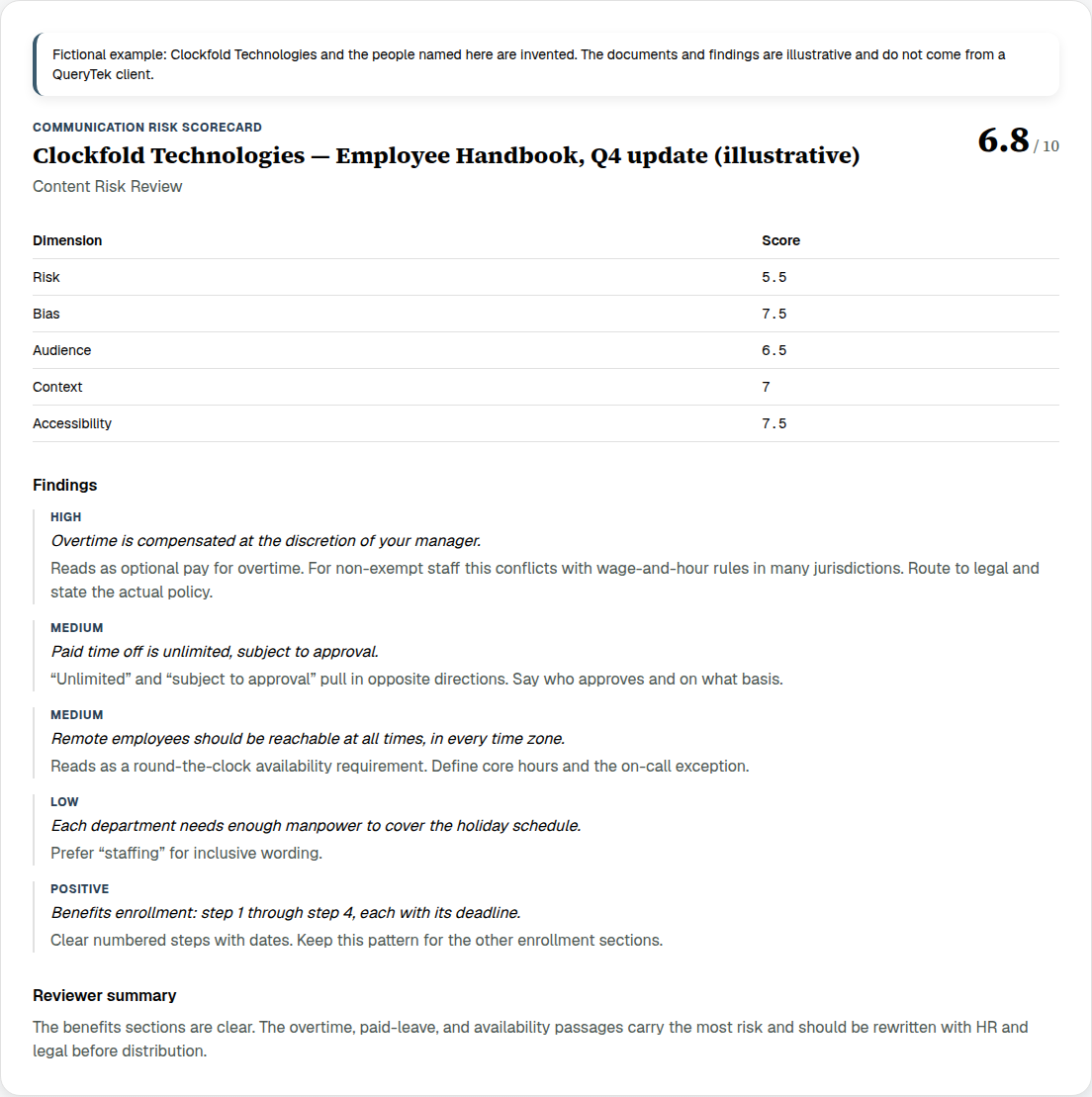
A fictional corporate communications team sends its employee handbook for a Content Risk review. See the findings a reviewer wrote.
Step through the same review from upload to lead approval, with each role explained.
See how a reviewer checks model-drafted release notes for unsupported claims and tone.
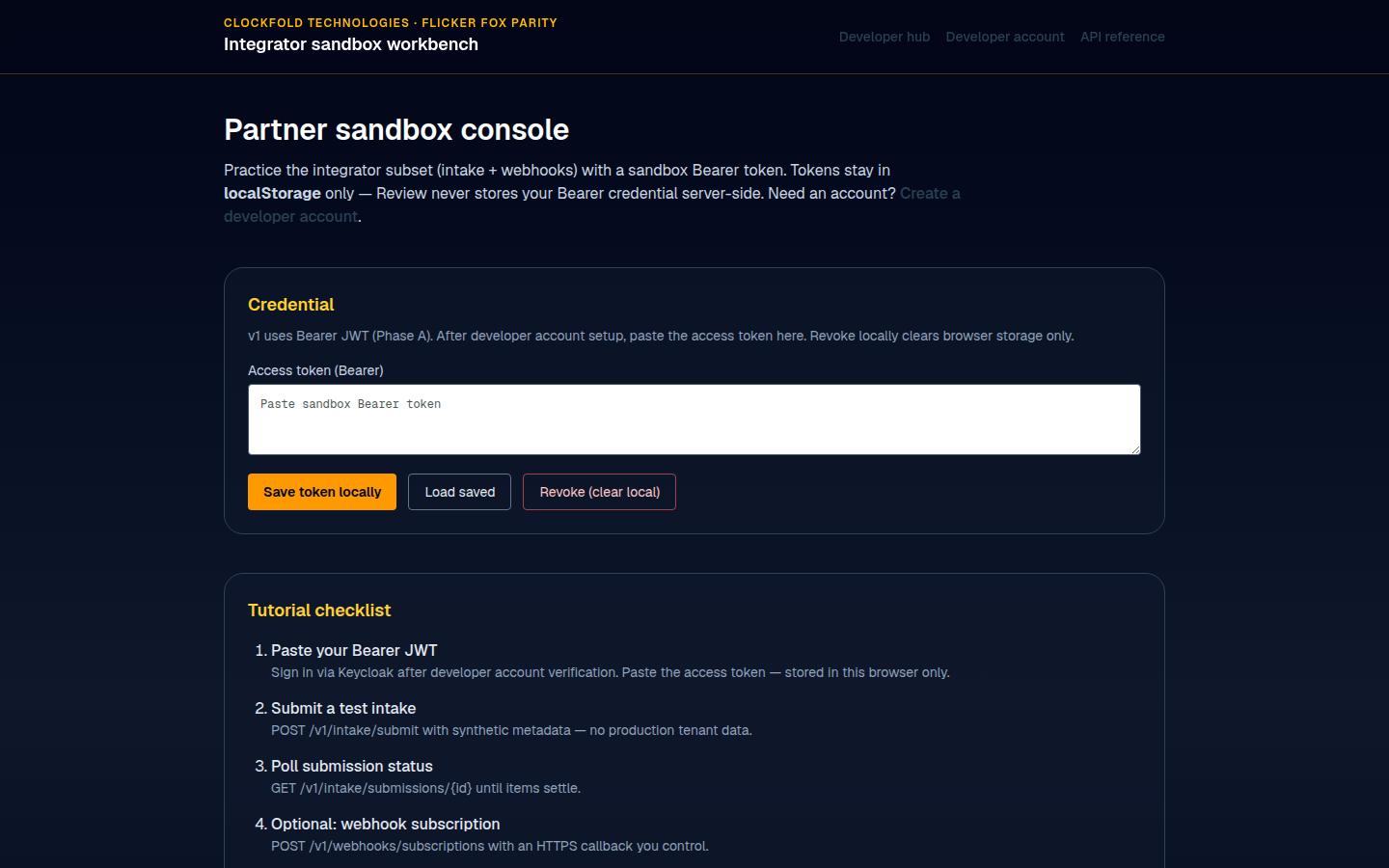
Sign up for the integrator sandbox and practice intake and webhook calls against sample data.
Prefer a guided tour? We can run a live screenshare of the reviewer and review lead views.
QueryTek Tapestry is a separate QueryTek product with its own press materials. This page covers QueryTek Review only. Visit querytek.io
The Trust Center summarizes the security posture we can substantiate today and what is not yet available. Security reviewers can request the customer diligence pack there.
For interviews, fact checks, and briefings, email the press team. We reply from the same address.